耕す舞台、育つ文化 _横芝光町虫生地区における鬼来迎継承のためのランドスケープ提案_
三堀 響介
Cultivating Stages, Nurturing Culture-Landscape Proposals for the Preservation of the Kiraigō Tradition in the Musyō District, Yokoshibahikari Town.-
Kyosuke Mitsubori
- JP
- EN
- INCENTIVE_AWARD
- 奨励賞
耕す舞台、育つ文化 _横芝光町虫生地区における鬼来迎継承のためのランドスケープ提案_
三堀 響介
Cultivating Stages, Nurturing Culture-Landscape Proposals for the Preservation of the Kiraigō Tradition in the Musyō District, Yokoshibahikari Town.-
Kyosuke Mitsubori
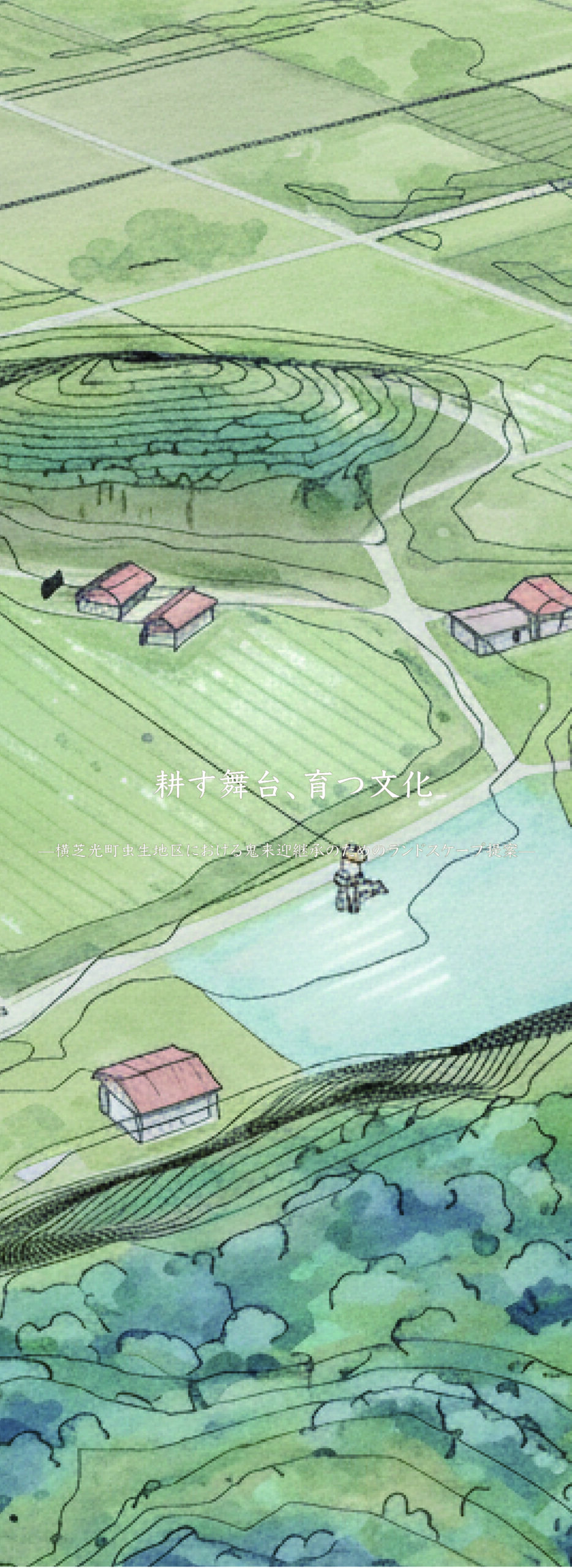
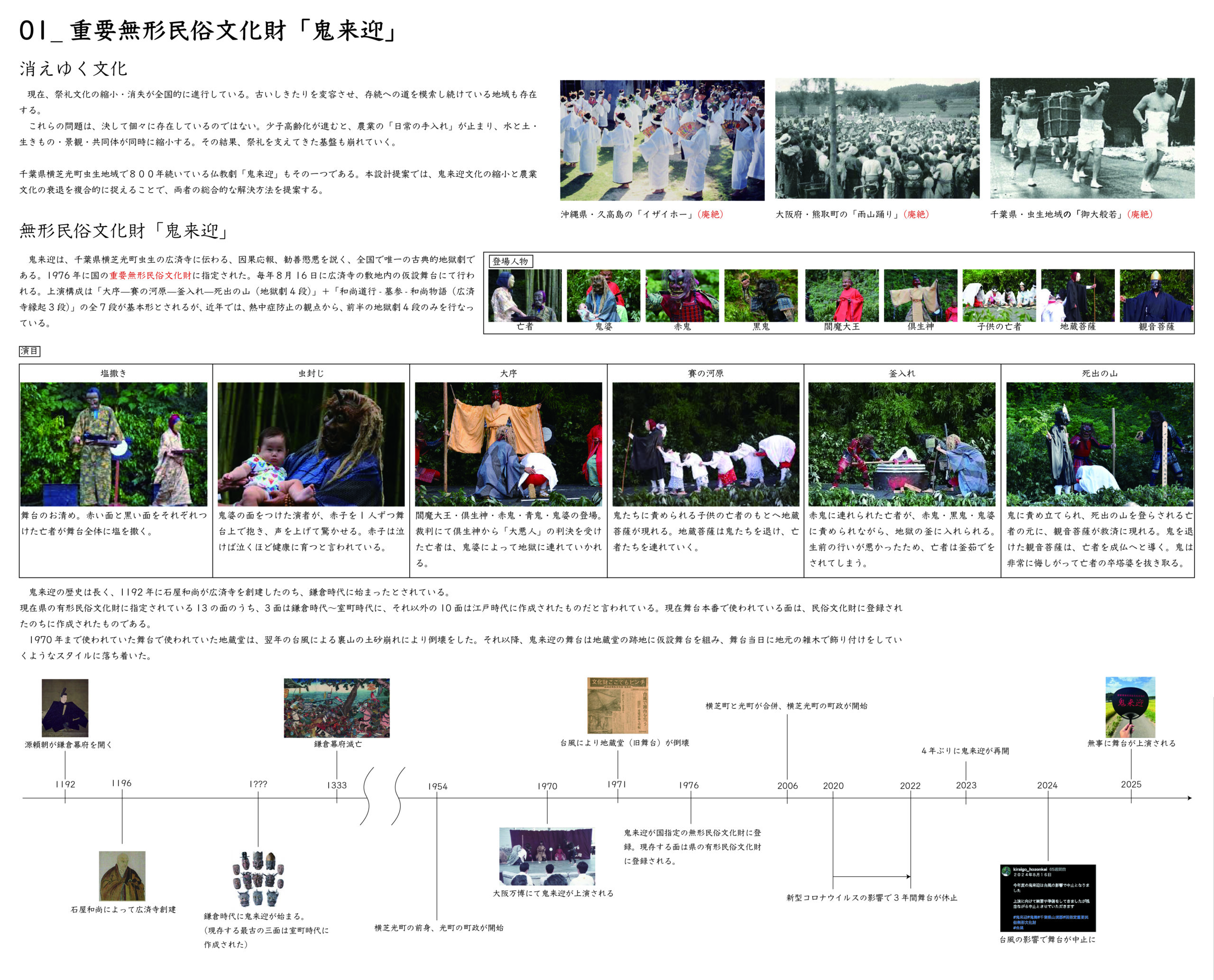
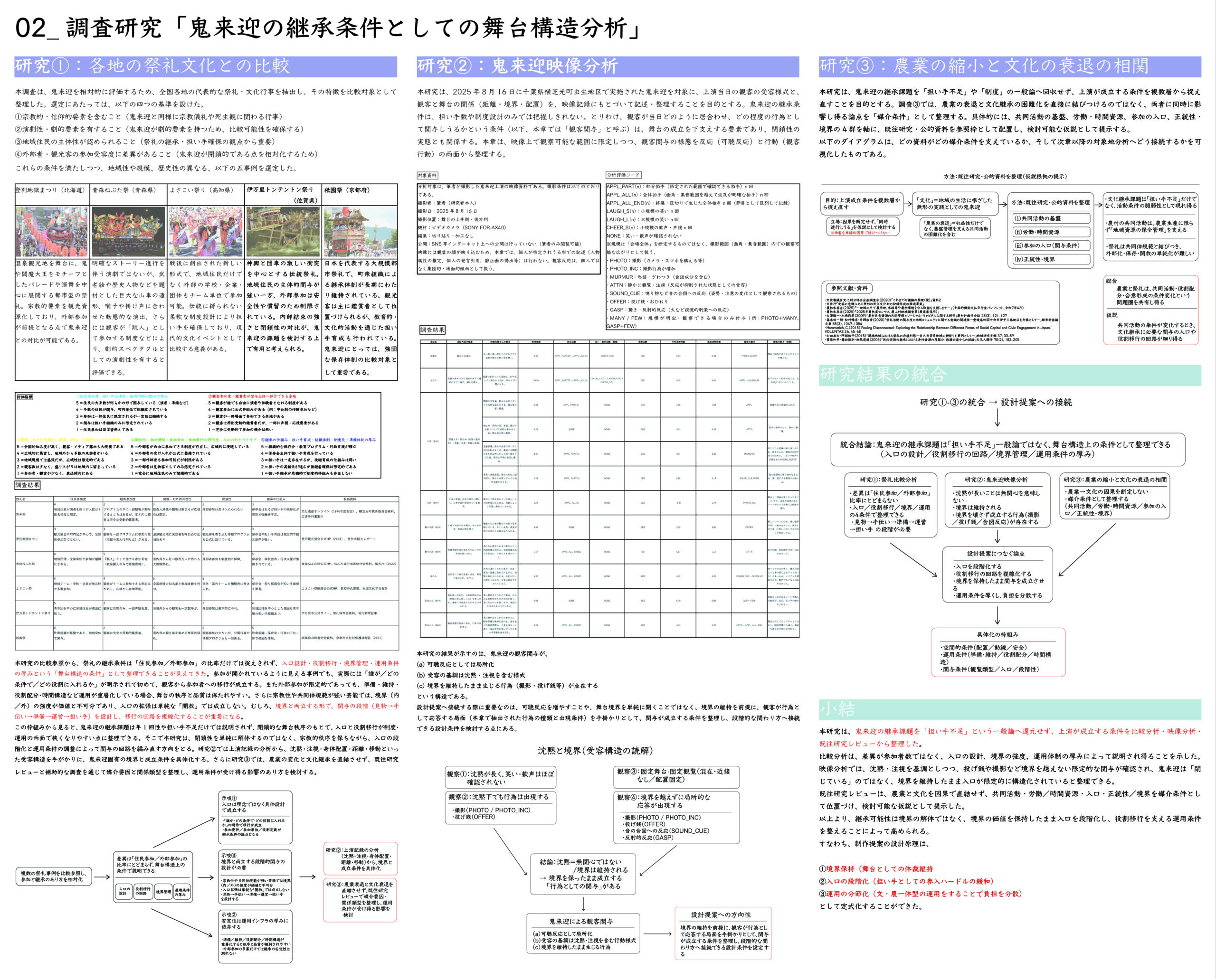
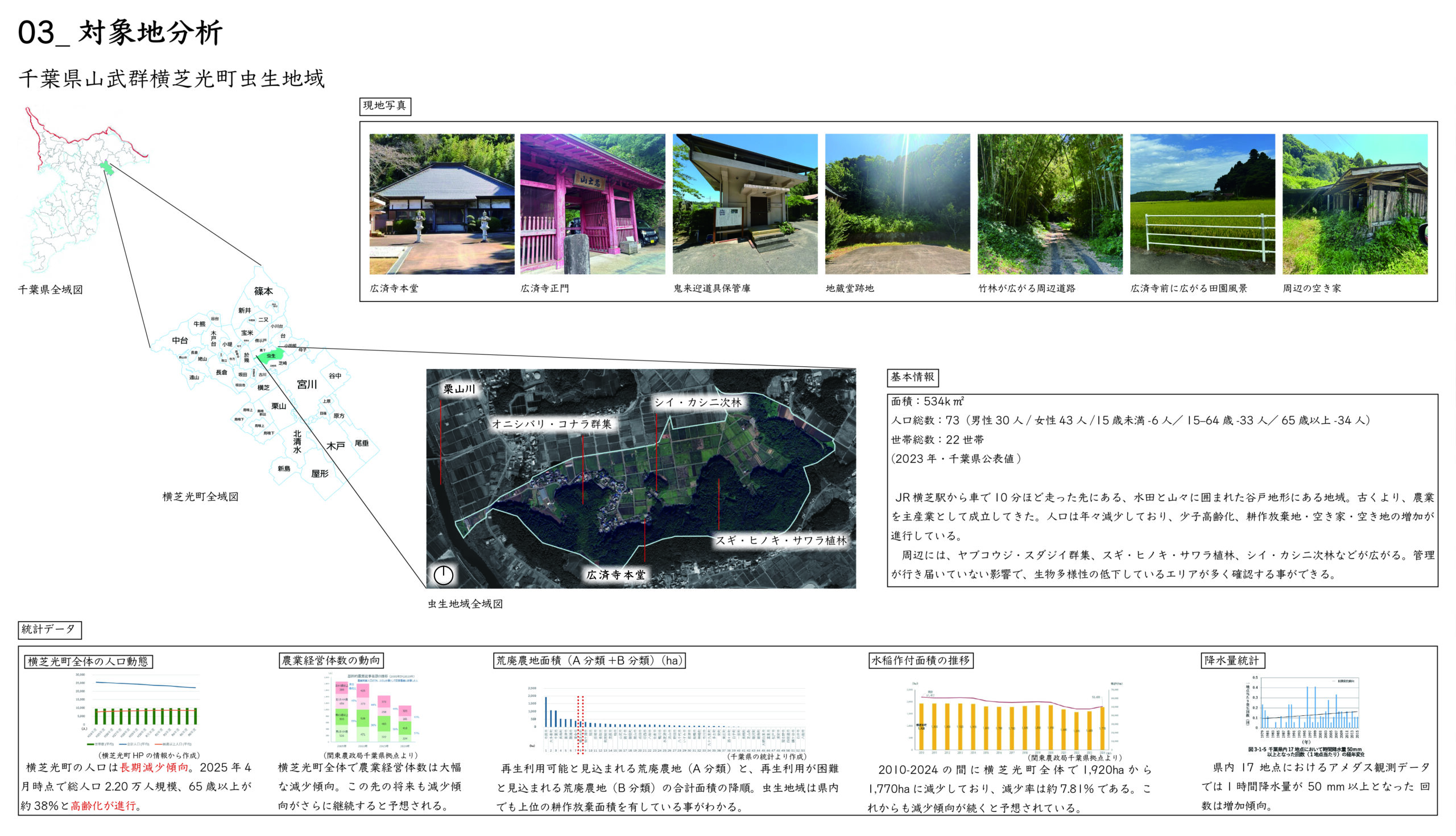
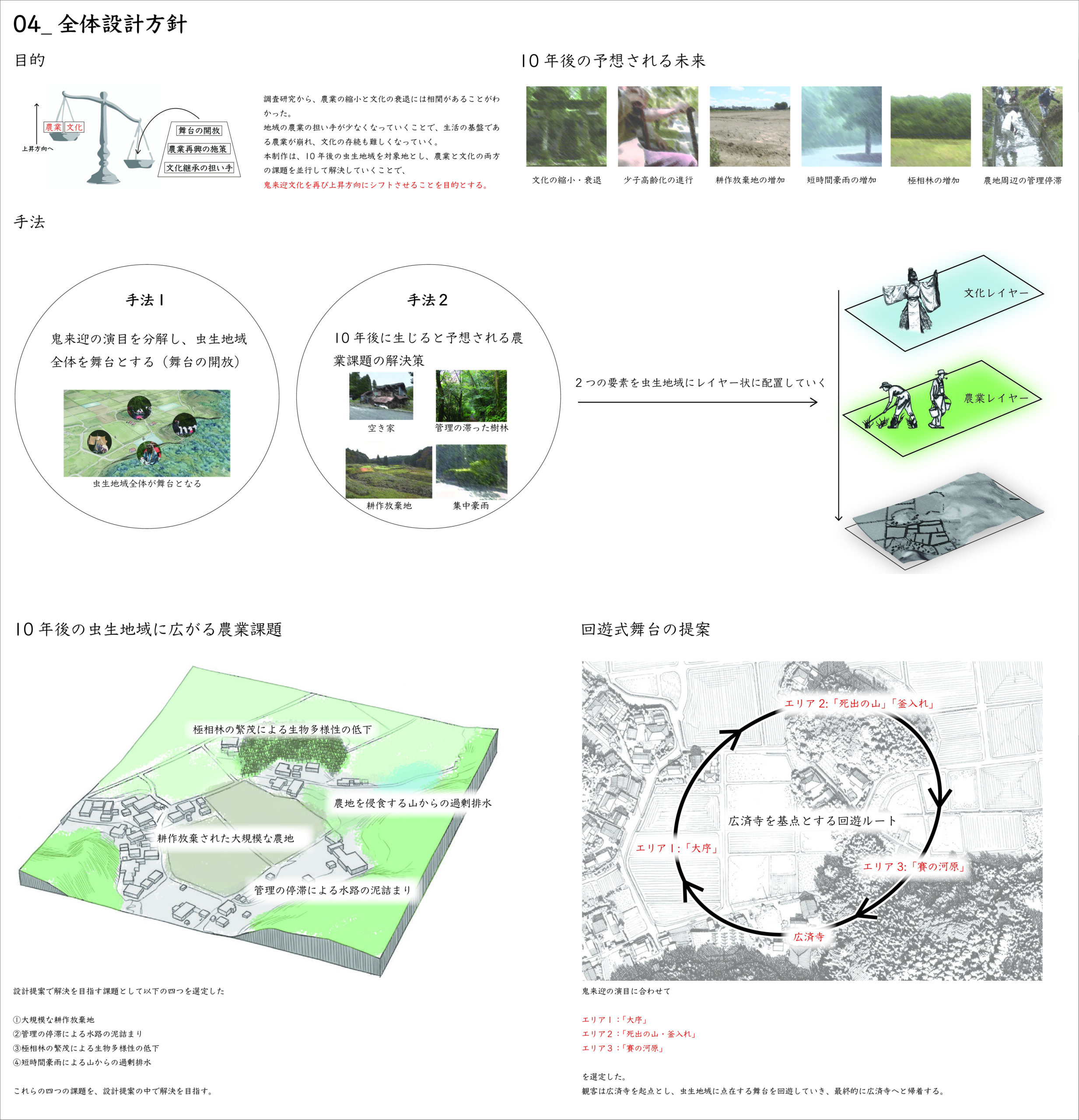
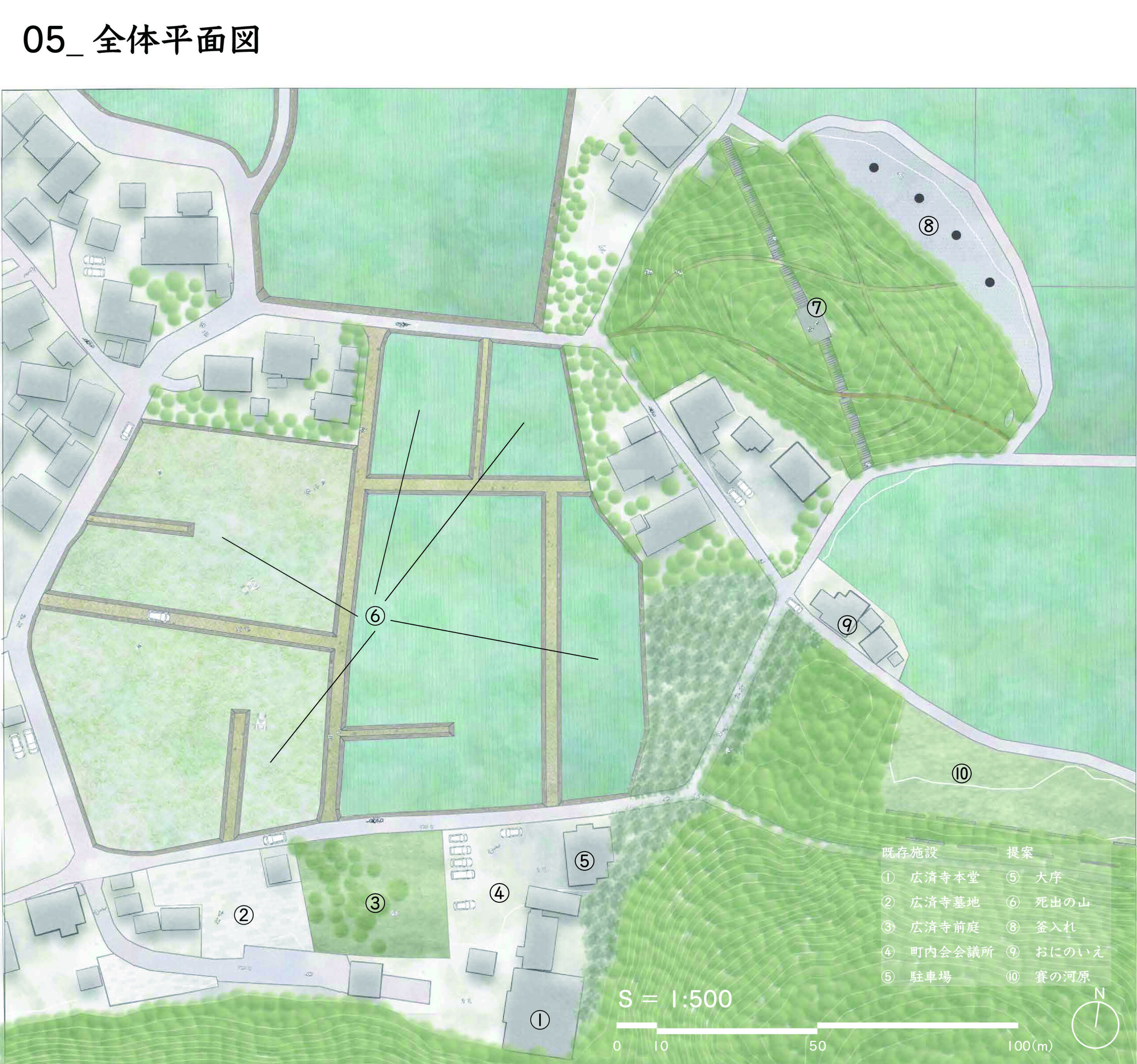
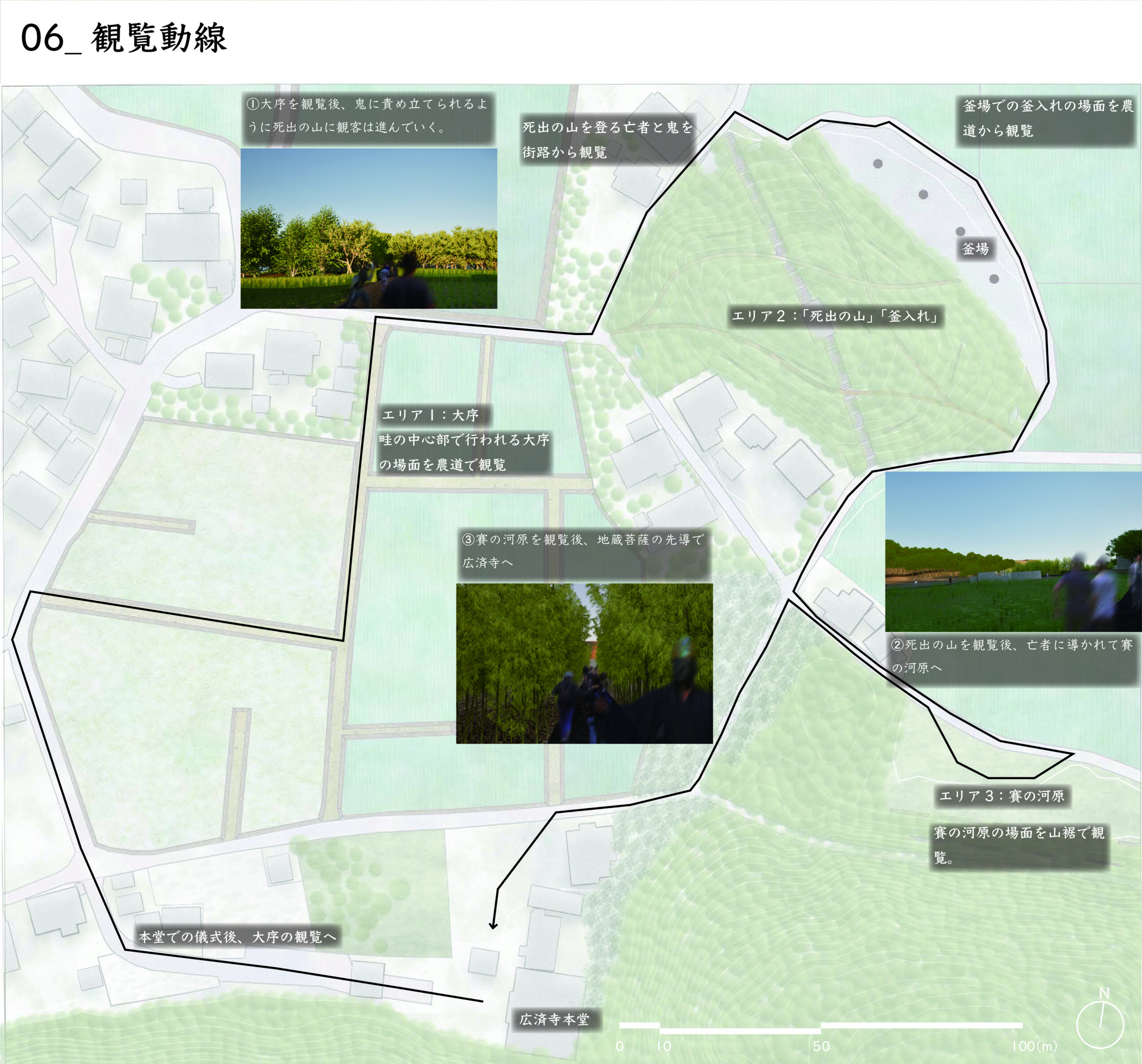
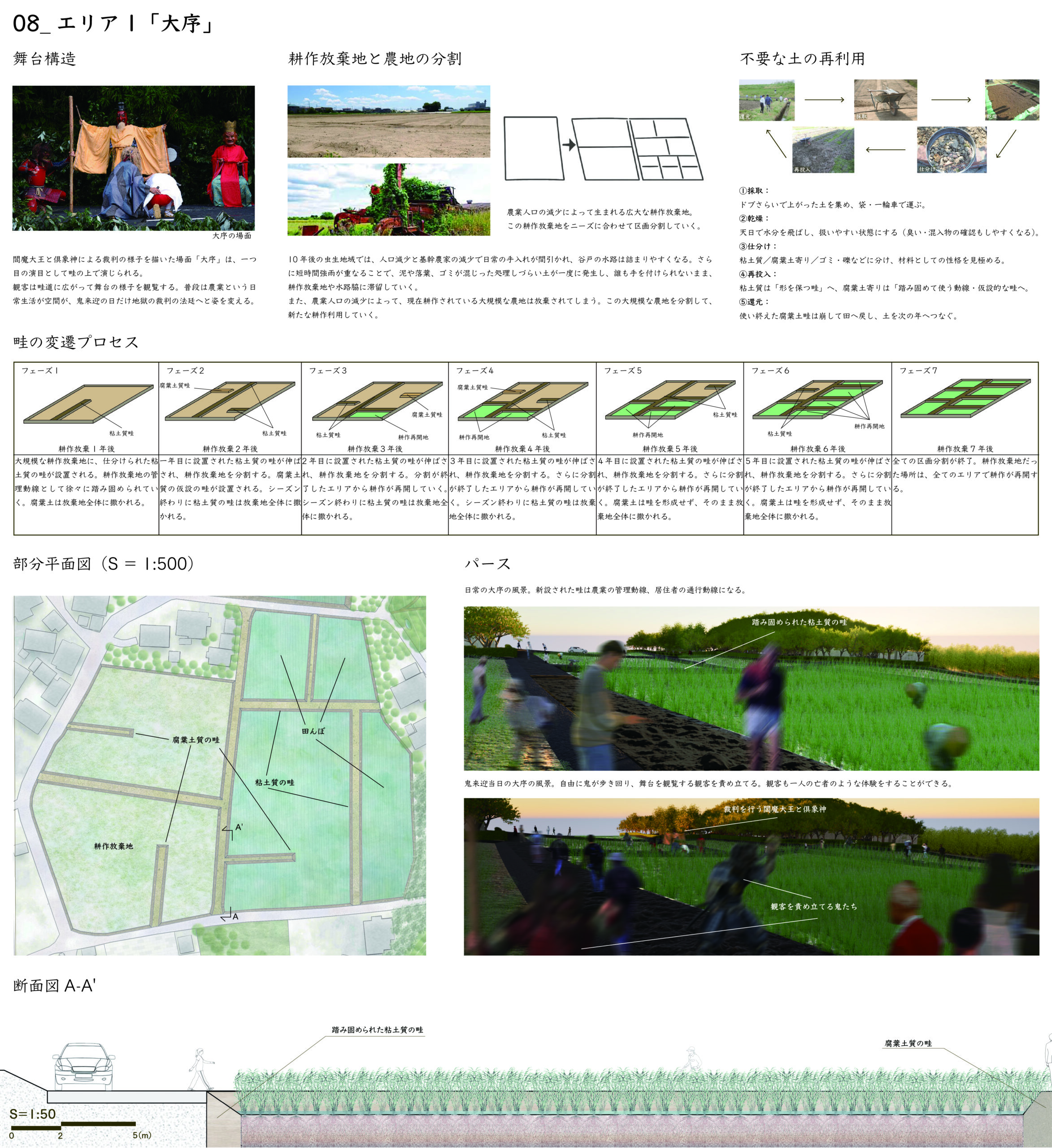
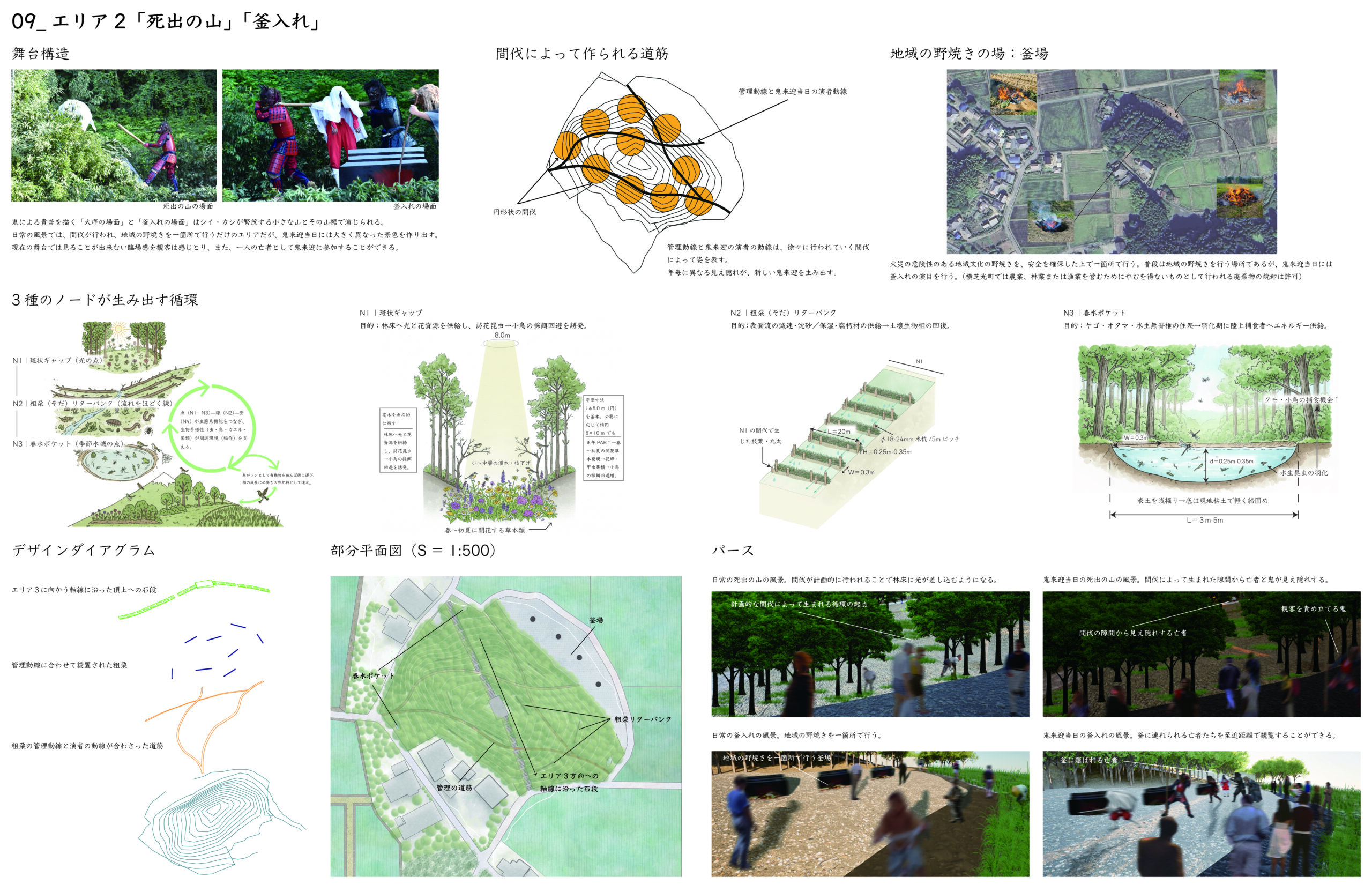
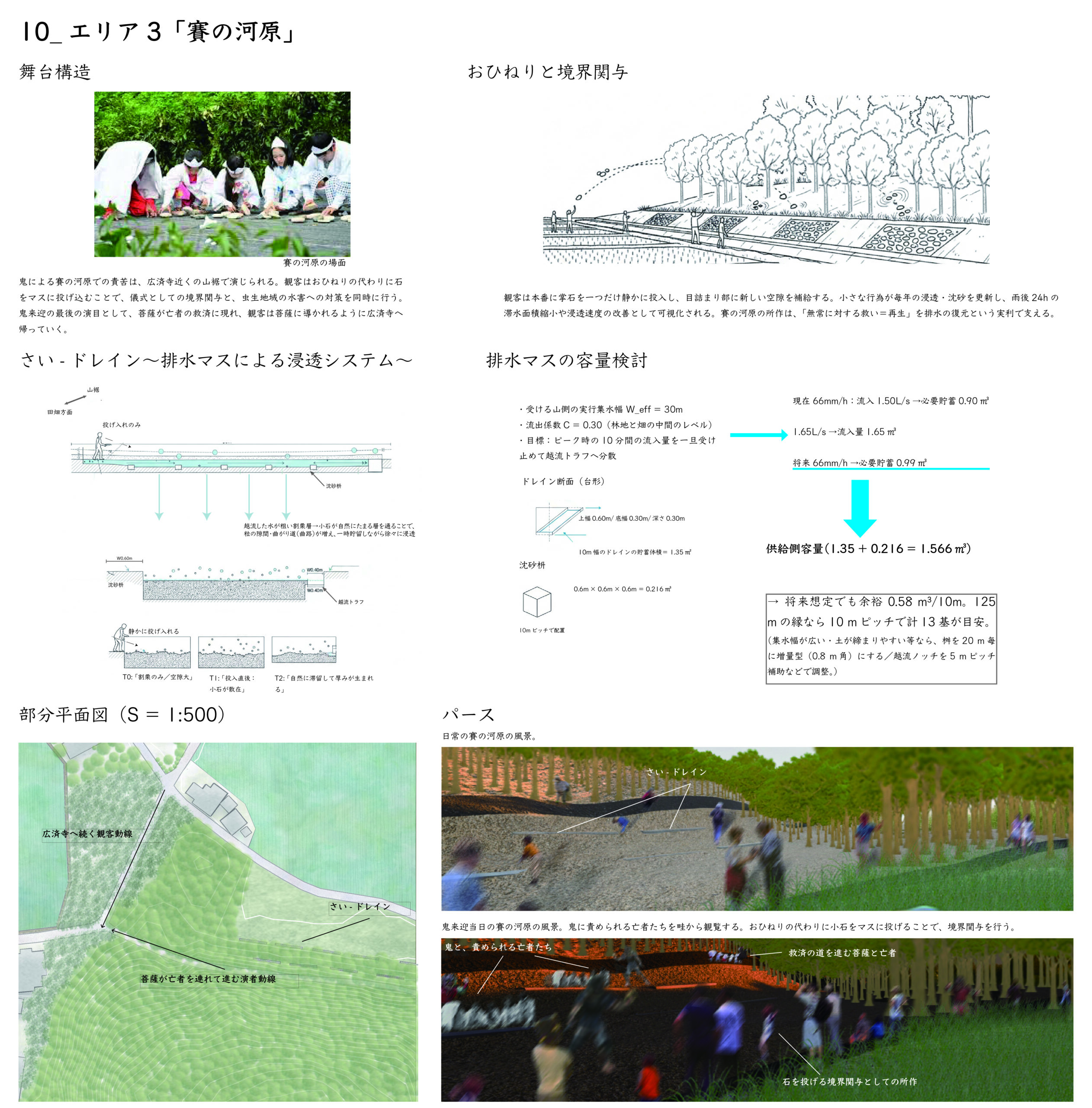
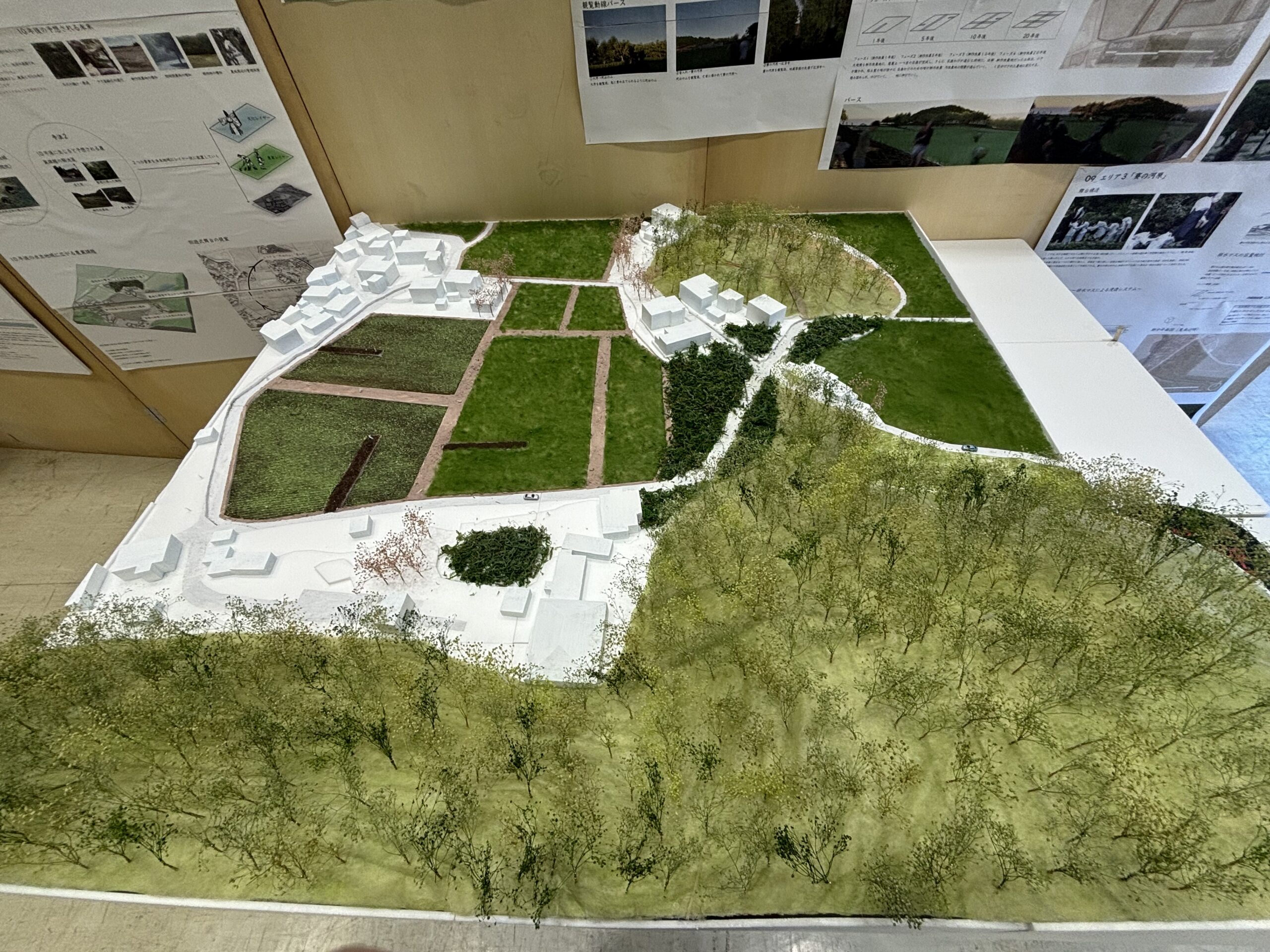
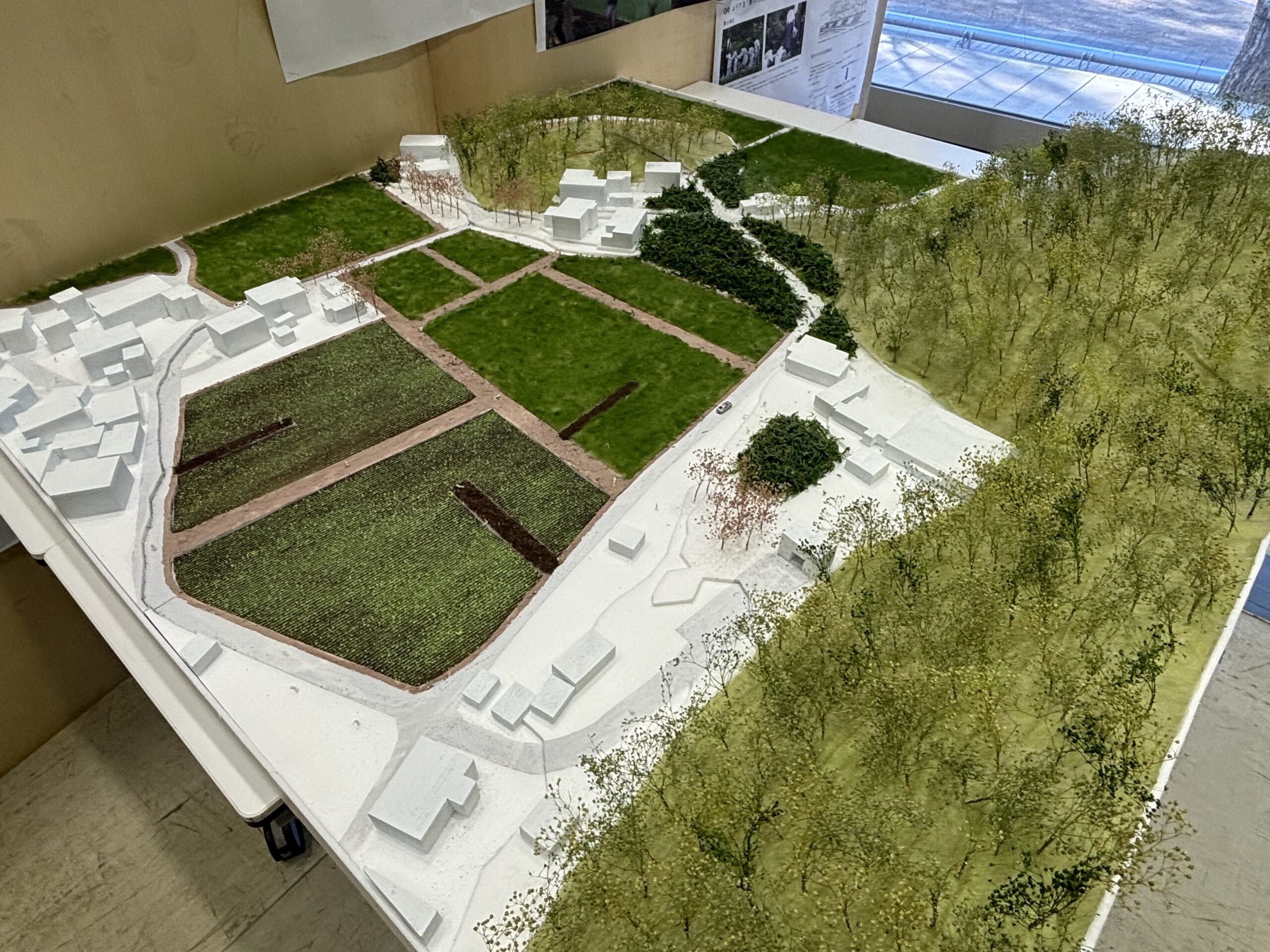
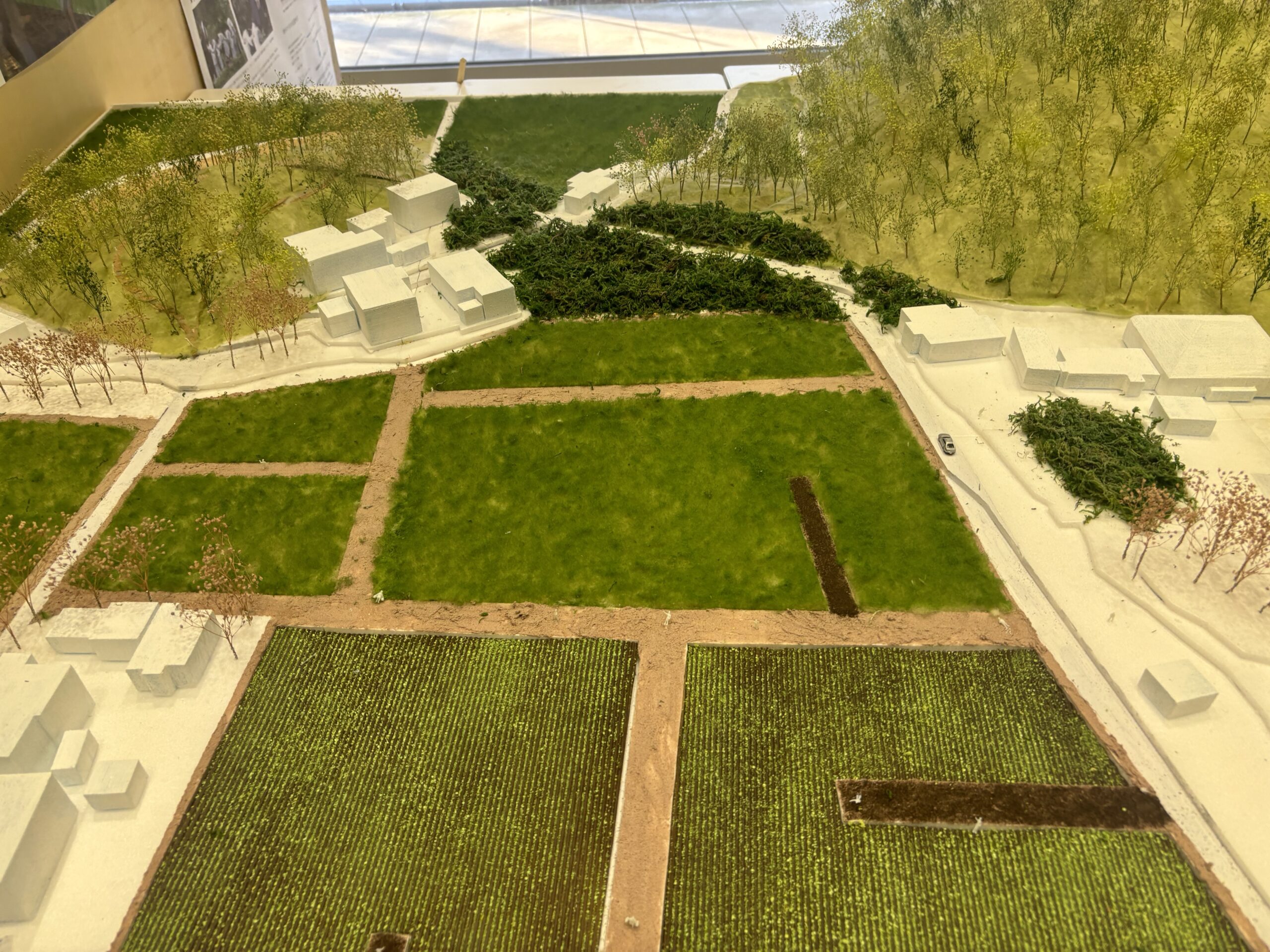
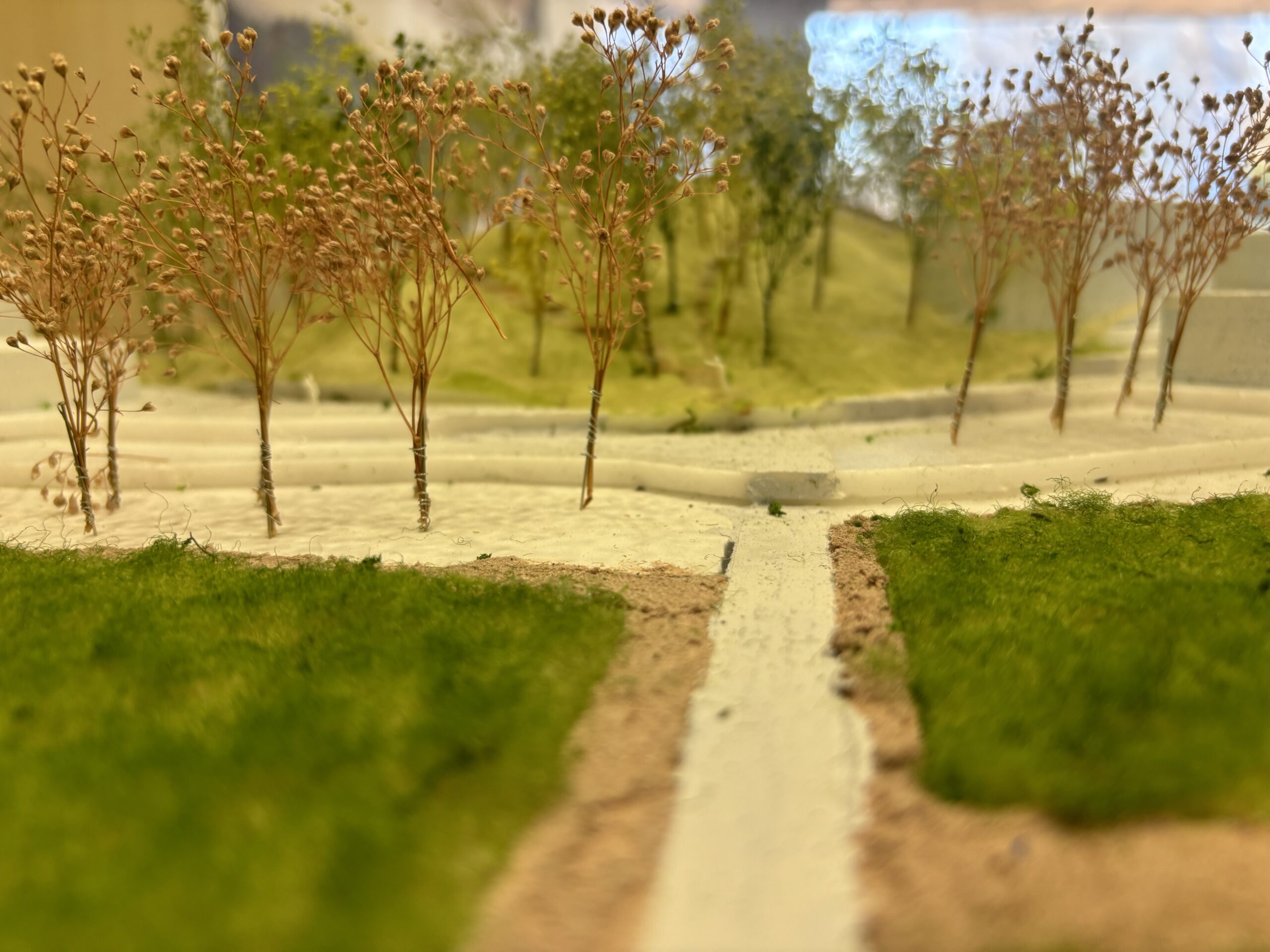
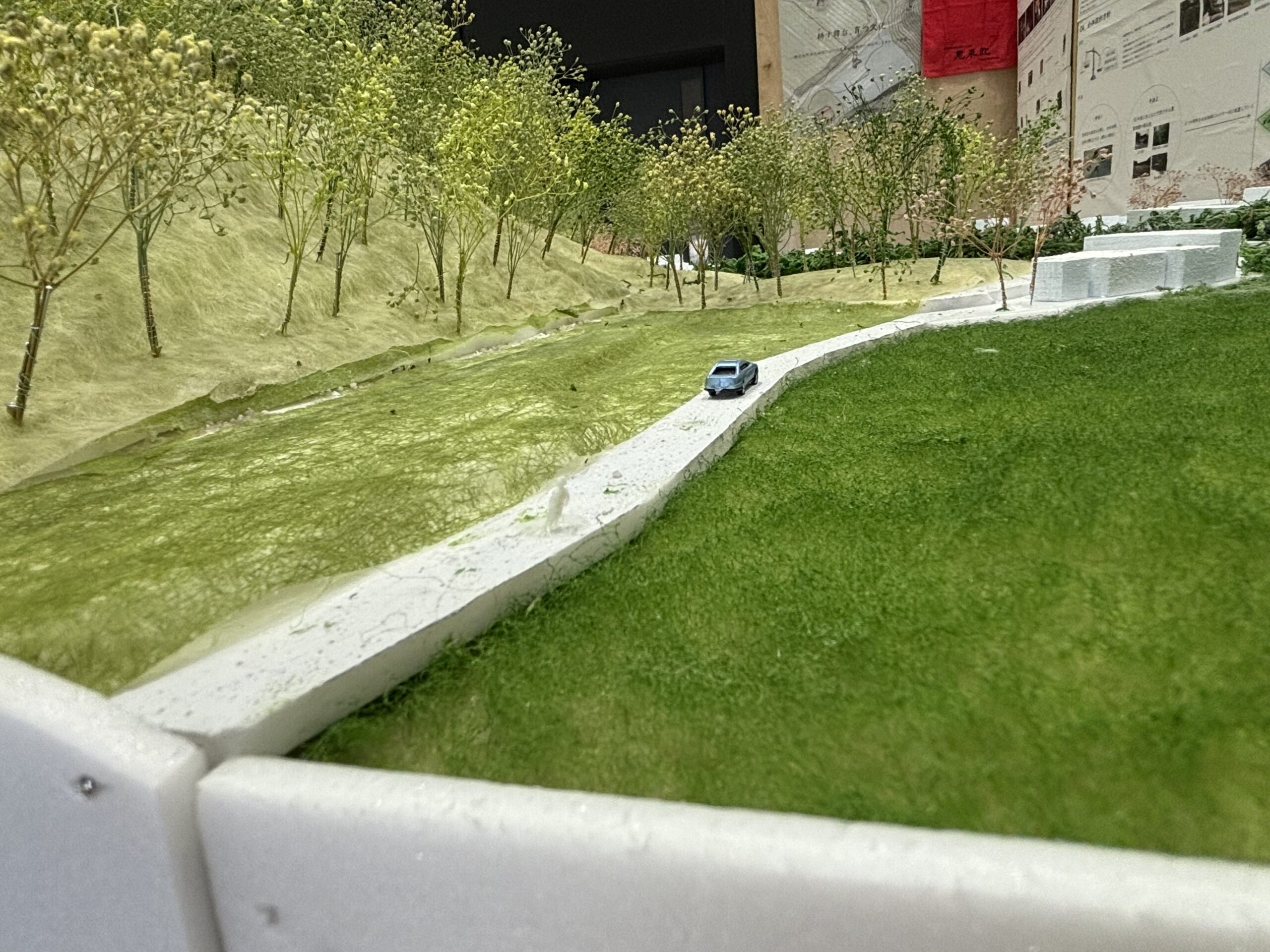
千葉県横芝光町虫生に伝わる民俗芸能・鬼来迎(国指定重要無形民俗文化財)を対象に、当日の上演(ハレ)と日常の基盤管理(ケ)が同じ空間資源の上で切り替わる「二重の場所」を提案する。回遊式の舞台動線で観覧と境界(秩序・安全)を両立し、平時は手入れ・学習・準備・記録の受け皿として機能させ、関与の入口を段階化して担い手へ接続する。畦の更新、里山の間伐、排水の設えを通じて、農の再生と文化の継承が支え合う回路を描く。
This proposal focuses on the folk performing art Kiraigō (a nationally designated Important Intangible Folk Cultural Property) passed down in Mushyou, Yokoshibahikari Town, Chiba Prefecture. It proposes a “dual space” where the performance day (special occasion) and daily foundational management (everyday life) switch within the same spatial resources. A meandering stage layout balances spectatorship with boundaries (order and safety). In everyday use, it functions as a space for maintenance, learning, preparation, and documentation, while providing a phased entry point for engagement that connects to the practitioners. Through the renewal of rice paddy ridges, thinning of satoyama forests, and installation of drainage systems, it creates a circuit where agricultural regeneration and cultural inheritance mutually support each other.